Chapter 12
Duty
When the light comes back, it’s rude about it.
It stabs straight through my eyelids and into whatever part of the brain handles regret. I groan, roll sideways, and immediately discover two things.
One: I’m in The Bus.
Two: my left pinky is broken.
I hold it up and study the angle.
“Well,” I say to nobody, “that seems unnecessary.”
Ted warned me he’d break a bone if I touched another shrimp. In fairness to the man, he believes in follow-through.
I’m sprawled across the first bench seat like discarded laundry. It takes a full minute to remember where I am, another minute to remember why, and a third to decide consciousness is a poor lifestyle choice.
The parking lot lights outside click on one by one. Dusk settles over Portia’s.
I crawl into the driver’s seat and catch my reflection in the side mirror.
My face looks like a before picture for a safety campaign.
Split lip. One eye swelling shut. Fresh cuts around the cheekbone. Dry blood at the hairline. I touch the back of my skull and hiss.
This beating is different from Tay and Te.
That one was business.
This one is personal.
The keys are already in the ignition.
How thoughtful.
I start The Bus. The radio comes alive immediately.
“Don’t Know What You Got (Till It’s Gone).”
Cinderella.
For one strange second, I just listen.
Then I drive my right fist through the dashboard.
Plastic cracks.
The song keeps playing.
I hit it again. And again. And again until the casing splits and metal edges open my knuckles. Blood slicks across the ruined radio.
I keep punching.
I think about Ginger choking on the floor.
I think about Ted buttering his bread.
I think about men and women in my Village being lined up for monsters.
I think about Patricia’s face when I tell her I failed.
I punch until the music dies.
Then I lay my forehead against the steering wheel and breathe like a dying accordion.
All I want in that moment is to hear Kristy Lee’s voice.
I have no explanation for that.
Instead, I get Captain Henderson.
He rolls up beside me in an unmarked sedan, window down, eating a cherry-dipped ice cream cone like life has never disappointed him once.
Henderson doesn’t happen by.
Men like Henderson don’t accidentally find themselves outside Portia’s at dusk in unmarked cars.
He’s been watching the place.
Maybe Ted.
Maybe me.
Neither makes me feel special.
“How are we doing this evening?” he asks.
My throat feels sanded raw.
“What?”
He takes another lick.
“I said, how are we doing this evening?”
I stare at him.
He stares back.
Then he smiles that polished movie-star smile of his.
“Need a ride?”
“I need a hospital.”
“That can be arranged.”
Hospitals are where time goes to die.
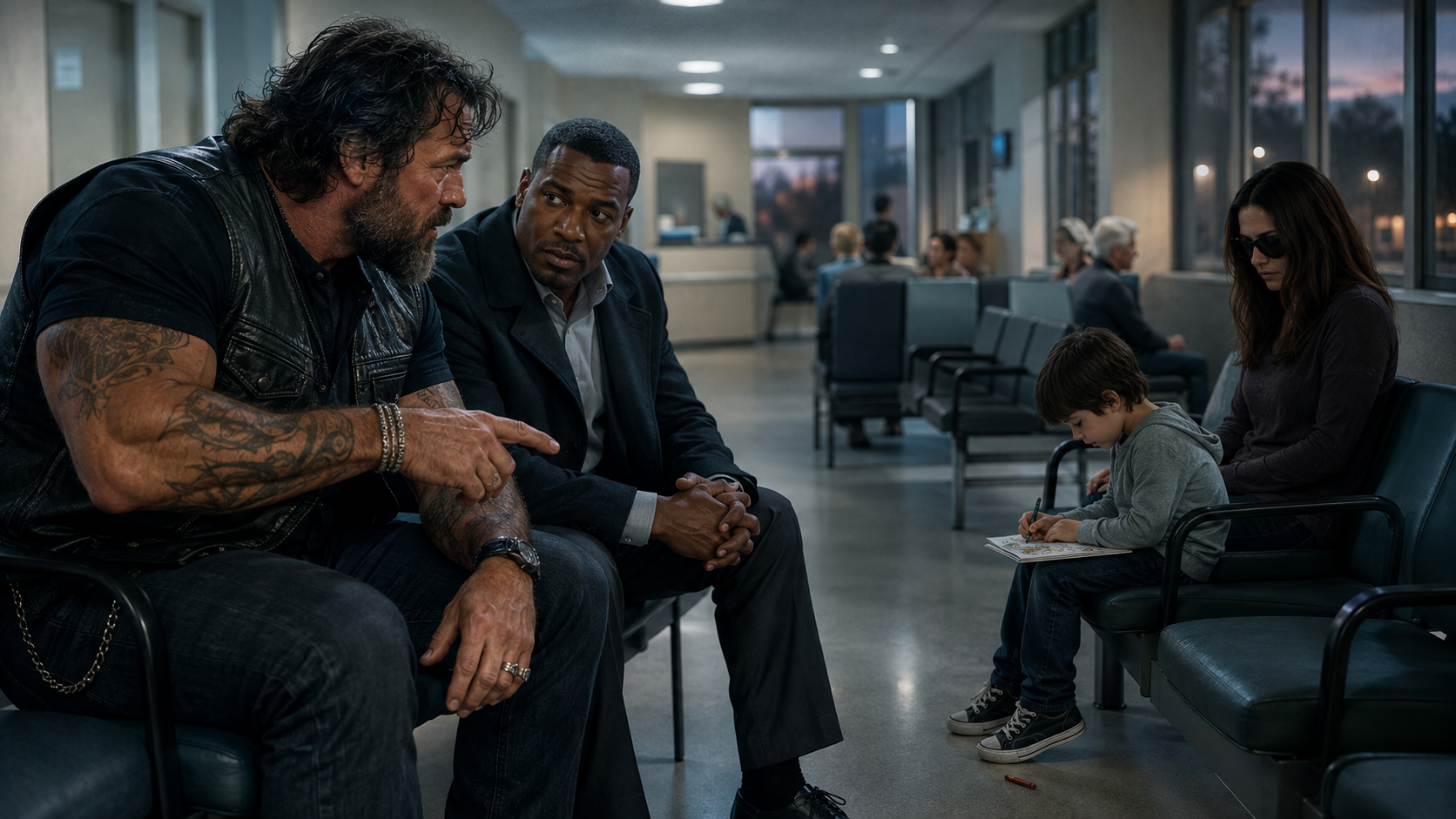
Captain Henderson walks me into Paradise Regional like he’s escorting a drunk cousin to Thanksgiving dinner.
The waiting room is full in the special way only waiting rooms can be full—quiet misery packed into plastic chairs.
I stand out.
Most folks wear sweatpants, uniforms, work boots, tired faces.
I look like a biker who lost a bar fight, then won a second one badly.
Henderson looks like a senator campaigning for hugs.
We sit.
Across from us is a woman in her thirties wearing sunglasses indoors and long sleeves despite the heat. She keeps staring at the floor. A little boy beside her colors on an activity sheet with a broken crayon.
I nudge Henderson.
“See her?”
He glances over. “What about her?”
“She’s being abused.”
He looks back at me.
“How do you know?”
I shrug carefully. Even shrugging hurts.
“Sometimes you just do.”
The boy drops his crayon.
The woman flinches like someone fired a gun.
Henderson watches her for a long moment.
Then he says nothing.
That’s how I know he believes me.
When the nurse calls my name, I rise like an old bridge in high wind.
The exam room smells like bleach and disappointment.
A nurse looks me over, then looks at my chart, then looks at me again.
“What happened?”
“Peanut butter.”
She blinks.
“Sir.”
“Violent allergic reaction.”
Captain Henderson leans against the wall, enjoying himself.
She pinches the bridge of her nose.
“Were you assaulted?”
“Emotionally, yes.”
“Physically?”
I consider it.
“Frequently.”
She mutters something about men being children, then goes to work.
I get stitched, wrapped, taped, scanned, prodded, and charged enough money to qualify as a mugging.
The nurse straps my pinky into a stiff aluminum splint that makes the finger look twice its normal size.
I hate it immediately.
It catches on the edge of the examination table when I stand.
I hate it more.
The doctor tells me I have a mild concussion, bruised ribs, a fractured pinky, and poor judgment.
I tell him one of those is preexisting.
No one laughs except Henderson.
At billing, the clerk tells me what I owe.
I slide two hundred-dollar bills onto the counter.
“Put that toward it.”
She frowns. “That won’t cover—”
“I know math.”
She gives me paperwork promising that other people will find me and ask for the rest.
Good luck to them.
I look across the waiting room.
The woman and the boy are still there.
I open my wallet and pull out everything left inside—folded bills, loose twenties, the emergency fifty I keep hidden behind a gas receipt.
Not enough to start over.
Enough to start moving.
I take out a plain white card with a phone number written on it and cross the waiting room.
The woman sees me coming and stiffens.
Can’t blame her.
I look like the last thing she needs.
I set the folded bills and the card on the boy’s coloring page.
“Your mom dropped this.”
The kid looks at the money.
Then at me.
“No, she didn’t.”
Smart kid.
“Then somebody did.”
I look at the woman.
“The number on the card answers day or night. No questions unless you want somebody to ask them.”
Her lips part, but nothing comes out.
I leave before she has to thank me.
Henderson studies me without speaking.
That makes me nervous in ways shouting never could.
We get into his car.
This time I ride in front because I’m not leaking as much.
The splint catches on the seat belt.
Stupid thing.
Henderson starts the engine.
“No jokes now,” he says. “Tell me straight. What do you know about Rachel Lewis?”
Rachel Lewis.
I stare through the windshield at the dark parking lot.
Who cares about Rachel Lewis?
I just watched a woman die on a restaurant carpet while her father finished dinner.
I have a Village full of people sleeping under a threat they don’t know exists yet.
I have Patricia waiting for a promise I’m not bringing home.
And somehow we’re talking about Rachel.
“I don’t know her,” I say.
He waits.
“I don’t know anyone by that name.”
He keeps waiting.
Some men use silence like a weapon.
Henderson has military-grade silence.
Finally, he says, “Rachel Lewis disappeared years ago. I was the first officer on the case. I don’t believe she’s dead.”
“That’s touching.”
“I think certain people know where she is.”
“That sounds like police work.”
“I think you may be one of them.”
I laugh, then immediately regret it because of the ribs.
“You think I’m hiding women now? Busy week for me.”
“Tell me about the farm.”
I look down at the floor mat.
“Old MacDonald runs it.”
His hand shoots out and grabs a fistful of my hair, jerking my head upright.
“Enough.”
Pain sends sparks across the backs of my eyes.
I speak very carefully.
“Take your hand off me.”
He does.
Then he says, calmer than before, “Tell me about the farm.”
I rub my scalp.
“It’s where I get the tools for my assignments.”
“From Ted Polmey?”
“I didn’t say that.”
“You didn’t have to.”
I close my eyes.
Behind them, I see Ginger convulsing.
“Did you ever see a woman there?” he asks. “Rachel. Anyone matching her description?”
“No.”
“A wrecked car?”
“No.”
“Anything unusual?”
I think about the song playing in an empty house.
The bedroom that looked like nobody had ever breathed in it.
The two bodies I saw on the couch that somehow didn’t make it into Henderson’s photographs.
“No.”
I open my eyes and turn toward him.
“You know what’s unusual, Captain?”
He says nothing.
“Watching a father murder his daughter between courses.”
That gets him.
His face changes just enough to count.
“Who?”
I look at him.
He gets there on his own.
“Polmey?”
“Drive.”
“Gene—”
“Drive the damn car.”
He drives.
We ride in silence through Paradise.
Couples walk the sidewalks in the cooling dark. Porch lights glow. Sprinklers tick across little green lawns. People live whole lives out there with no idea monsters have dinner reservations.
When we turn onto my street, I see two neighbors walking a dog.
They see the unmarked sedan.
They see me inside.
They slow.
Heads turn.
Whispers start before the tires stop rolling.
They know what an unmarked police car looks like.
In a place like ours, everyone does.
Henderson parks.
The Bus is already sitting outside my house.
Somebody—probably one of Henderson’s people—brought it home while I was getting stitched up.
Thoughtful.
Violating, but thoughtful.
I look at The Bus.
Then at him.
“You search it?”
“You should get that radio looked at.”
I reach for the door.
“Gene.”
I pause.
“You’re in over your head,” he says. “Ted Polmey doesn’t end well for people. Whatever game you think you’re playing, you need help.”
I lean against the open door.
“You offering friendship now, Chuck?”
“I’m offering reality.”
I get out.
He lowers the window.
“Think about Rachel Lewis.”
I shut the door and walk away.
He calls something after me. Then the horn sounds once as he pulls off.
I don’t turn around.
Across the street, curtains move.
Porches have eyes.
By morning, half of Paradise will have decided I’m working with the police.
By breakfast, Ted will know.
I stand at the curb for a moment, swaying slightly.
Then I start toward Patricia’s house.
For the first time since any of this began, I’m not afraid of what Ted might do to me.
I’m afraid of what he’ll do to everyone else.
Around the fire
Join the conversation.
Reader comments appear only after T. G. Bonfire approves them. That keeps this space thoughtful, human, and free of noise.