Chapter 19
Multiview
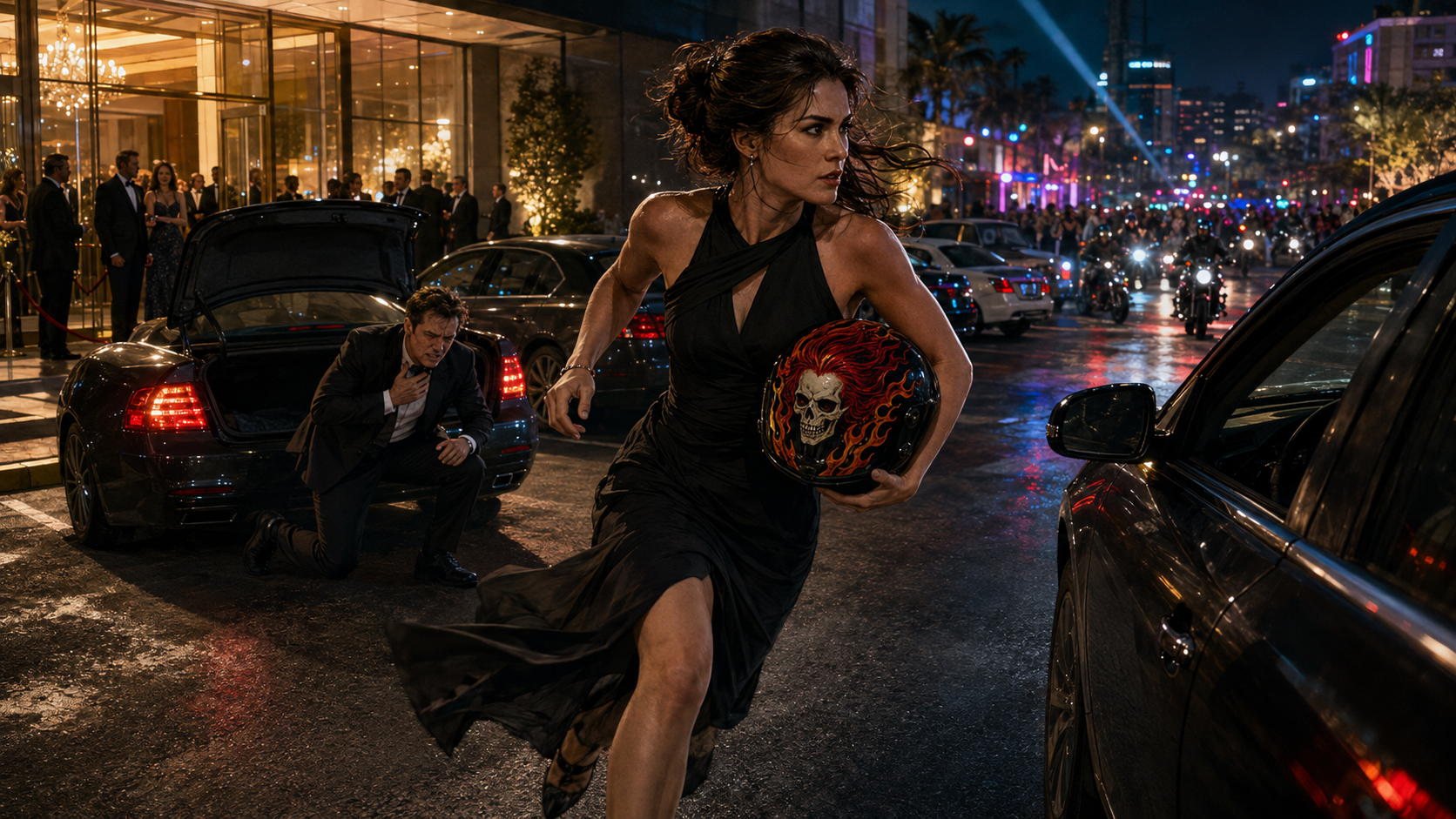
Ted Polmey
Ted Polmey does not believe in gods.
He believes in leverage.
Which makes the man sitting across from him difficult to tolerate.
The penthouse lights are low. The city stretches behind the glass like something owned rather than admired. The kind of view people pay for so they can pretend they matter.
Ted already knows he matters.
He just doesn’t like being reminded that other things might matter more.
“The Order does not make requests lightly,” the man says.
He wears the calm well. The certainty. The quiet confidence of someone who doesn’t need to raise his voice because the world has already agreed to listen.
Ted swirls the drink in his glass and watches the amber catch the light.
“Funny,” Ted says. “Because it sounds a lot like a request.”
“It is a directive.”
Ted smiles without humor.
“See, that’s where we’re going to have a problem.”
A measured pause.
The man doesn’t rise to it.
“Gene must be found.”
“There it is again,” Ted says. “You keep saying his name like he’s the point.”
He takes a sip and sets down the glass.
“Business has been good,” Ted continues. “Let’s not pretend otherwise. You people show up, strange things start working in my favor. I don’t ask too many questions. You don’t get in my way. Everybody wins.”
Another pause.
Then—
“Ginger wants him.”
That does it.
Not visibly.
Not in any way most people would catch.
But something inside Ted shifts.
Just a fraction.
Enough.
He leans back and studies the man.
Really studies him.
“That’s interesting.”
The man doesn’t respond.
Doesn’t need to.
Ted nods slowly.
“Because here’s the thing. I know Ginger.”
A beat.
“And Ginger is dead.”
Silence settles over the room.
Not empty.
Weighted.
The man across from him doesn’t flinch.
Doesn’t correct him.
Doesn’t explain.
That is worse.
Ted releases a quiet breath through his nose.
“You see my hesitation,” he says. “I’m all for partnerships. Power. Money. I’ll take it from anyone willing to hand it over—good, bad, I don’t discriminate.”
His eyes sharpen.
“But I’m not interested in worship.”
The word hangs there like something unpleasant.
“I don’t kneel.”
Another pause.
Then the man speaks.
“Find Gene.”
Simple.
Clean.
Final.
Ted stares at him for a long moment.
Then he smiles.
Not because anything is funny.
Because the smile is necessary.
“Of course.”
The first report comes ten minutes later.
Ted is adjusting his cuff links, preparing to leave for the annual Polmey Foundation Gala, when his phone buzzes.
He glances at the screen.
Frowns.
“Say that again.”
The voice on the other end repeats itself, less certain this time.
Ted ends the call slowly.
Then another call comes.
Then another.
By the fourth, he stops pretending it’s coincidence.
One of his men steps into the room.
“Sir, we’ve got eyes on him.”
Ted looks up.
“Where?”
“Warehouse district. Rave. He just came through—helmet, leather, whole thing.”
Ted’s jaw tightens.
“Lock it down.”
“Yes, sir.”
The man turns.
Ted’s phone buzzes again.
He answers.
Listens.
Doesn’t speak.
Then hangs up.
“Change of plans.”
The man stops.
“Sir?”
“Where is he?”
The man hesitates.
“Marina. Bonfire. Different team confirmed.”
Another buzz.
Ted doesn’t answer this time.
He doesn’t need to.
A voice calls from the hallway.
“Church downtown! There’s some kind of—”
“Riot,” someone else finishes. “He’s there too.”
Ted stands very still.
“How many?”
No one answers.
They don’t know how.
The city has decided to misbehave.
In the warehouse district, bodies pulse beneath neon lights while leather jackets catch the colors and throw them back.
At the marina, hundreds of silhouettes dance around a bonfire, motorcycle helmets reflecting the flames.
A rooftop fills with music and people standing along the edge like they own the night.
Church bingo becomes a dance floor. Tables overturn. Old women wear borrowed biker vests and shout numbers no one is calling anymore.
Music pours into streets.
Parties spill across intersections.
Strangers climb into strangers’ cars and follow rumors toward something louder.
Everywhere—
Gene.
Or someone wearing him.
Gene
I wake in the back seat of a moving car.
Music pounds through the speakers—too loud, too close, like it’s happening inside my skull.
I blink.
Unfamiliar ceiling.
Unfamiliar driver.
Unfamiliar life.
“Hey.”
My voice doesn’t land anywhere.
Someone laughs.
Not at me.
Just near me.
The car stops.
Hands pull me upright.
New place.
New room.
New ceiling.
Faces.
Strangers.
“Kristy said you’d be fine,” someone tells me.
Kristy Lee.
Right.
That matters.
I nod like I understand.
I don’t.
Time skips.
Now I’m on a couch.
Now I’m in a hallway.
Now someone dressed like a priest is handing me water.
I take it because refusing drinks from priests feels disrespectful.
Darkness.
A clown is laughing at something that isn’t funny.
Might be me.
“Stay with us, man.”
“I’m trying.”
I’m not sure who I’m talking to.
Or whether I’m still part of the conversation.
Every time I get close to holding on to something, darkness takes it back.
Kristy Lee
Still me.
Gene hasn’t regained enough consciousness to object.
Before I retrieve the helmet, I need Ted and the Order looking everywhere except where I’m going.
You don’t need twelve Genes.
You need twelve people willing to swear they saw one.
A tall man in leather crosses a warehouse dance floor.
Someone in a flaming-skull helmet rides past the marina.
Three drunk people call the same number and insist Gene started a riot at a church.
The sightings aren’t the plan.
They’re seasoning.
The parties are the plan.
At eleven, Paradise is still a city.
At eleven-oh-five, it becomes a party.
Warehouse doors roll open. Speakers appear on loading docks. Music rises from a rooftop that was empty ten minutes earlier. A bonfire erupts beside the marina.
Addresses spread.
People follow.
One party becomes five.
Five become twenty.
Music travels faster than explanations.
Nobody knows who started any of it.
That’s how you know it was done correctly.
People think crowds need instructions.
They don’t.
They need permission.
Music gives them permission. Confusion gives them freedom. A villain gives them direction.
Promise them a story worth telling tomorrow and they’ll do the rest.
The parties also give me a moving wall of noise to hide Gene behind.
Keeping a six-foot-five unconscious biker hidden is difficult.
Keeping him moving through a city full of bikers, costumes, helmets, vans, and strangers is considerably easier.
Nobody holds him longer than ten minutes.
Car.
House.
Hallway.
Another car.
Every person involved knows one piece.
Nobody knows the entire route.
Including Gene.
Especially Gene.
While he tours the city’s least reputable couches, I prepare for the Polmey Foundation Gala.
The sedan from the Marquette footage belongs to North County Executive Services, which belongs to an office suite, which belongs to one of Ted’s holding companies.
Another phone call gives me a name.
Timothy Vale.
Ted Polmey’s right hand.
The man who picked up Gene’s helmet.
Another call tells me where Tim will be tonight.
Gala credentials take four minutes.
The dress takes longer.
The Polmey Foundation Gala sparkles.
That’s the point.
Money on display. Power dressed up as generosity. Rich people congratulating one another for giving away amounts they won’t notice missing.
Ted moves through the room like it belongs to him.
Most of it probably does.
Tim stays close.
Right hand. Clean execution. No wasted movement.
The same controlled walk I saw on the Marquette footage.
He has the helmet.
Now I need him to show me where.
Ted pauses beside the bar.
“You sure about this?” Tim asks him.
Ted doesn’t look over.
“About what?”
“All of it.”
Ted smiles faintly.
“Never.”
Then he drifts into another conversation, leaving Tim to do what he does best.
Watch.
That’s when I approach.
I don’t rush.
I don’t need to.
“Long night?” I ask, sliding into his space like I’ve always belonged there.
Tim glances at me.
Assesses.
Adjusts.
“Something like that.”
I smile.
Just enough.
“Looks like the kind of night that doesn’t end where it starts.”
That gets his attention.
Good.
Twenty minutes later, Tim thinks leaving the ballroom is his idea.
That’s the point.
Cool air. Quieter parking lot. Enough distance from the noise to make everything feel private.
“I’ve got something better in the trunk,” he says.
“Better than what?”
He smiles.
“You’ll see.”
I follow.
Of course I do.
He reaches a black sedan and opens the trunk.
The helmet is inside.
Black shell. Red-haired skull surrounded by crooked flames.
Exactly where it should be.
Tim turns toward me.
That is his mistake.
I move fast.
Not wild.
Precise.
One strike to the throat.
Another to the side of his knee.
He drops hard, choking on air that won’t come.
I reach past him, grab the helmet, and run.
I don’t run blind.
I run with direction.
The getaway sedan waits where I left it. Unlocked. Duplicate key in my pocket.
I slide behind the wheel and turn over the engine before the door closes.
Tires scream.
The car launches forward.
In the mirror, Tim drags himself upright.
Tougher than he looks.
That’s inconvenient.
I cut through the gala traffic and take the first turn too fast.
Headlights swing into the road behind me.
Black SUV.
Tim has friends.
Of course he does.
I push the sedan harder, changing lanes, cutting corners, using the party traffic as cover.
Motorcycles surround me.
People hang through open windows, shouting toward places they haven’t reached yet.
Music overlaps from three directions.
The city is no longer behaving like a city.
Perfect.
Then a crowd spills into the street ahead.
One of the parties I set in motion has outgrown its building.
Noise.
Music.
Bodies.
I hit the brakes.
Too hard.
The sedan fishtails.
The rear end swings.
Impact.
Light pole.
Dead stop.
I’m out immediately.
The helmet slips from my grip and rolls beneath a pair of dancing feet.
I push through the crowd.
“Move.”
Nobody does.
I spot the flames on the helmet, reach between two sets of legs, and grab it.
A hand slams into my shoulder.
Tim.
He drives me into a wall.
Pain flashes along my spine.
“You’re done.”
The crowd watches.
Not scared.
Interested.
Waiting to learn what kind of story this will become.
Across the street, a tattoo shop glows beneath an OPEN sign.
Perfect.
“Hey!” I shout. “Ex-boyfriend! Won’t take no for an answer!”
Heads turn.
There.
A villain.
Tim’s grip tightens.
“You stupid—”
“Hundred bucks to whoever gets Jackass tattooed across his forehead!”
Now they have a story.
The crowd surges.
Hands grab Tim.
“What the hell—”
“I’ll do it for free!” somebody shouts.
The crowd cheers.
Tim disappears beneath reaching arms.
He is lifted off his feet and carried toward the tattoo shop while shouting threats nobody bothers to hear.
The tattoo artist sees them coming and raises both hands.
Someone waves cash.
His hands come down.
I tuck the helmet beneath my arm and slip into the crowd.
Gone before the moment ends.
Ted Again
Ted stands at the edge of the gala with a phone pressed to his ear.
Another sighting.
Another location.
Another version of the same man.
He ends the call slowly and looks through the glass at the city.
Music rises from somewhere below.
Lights flash against buildings.
Paradise has become one enormous celebration with no apparent reason to exist.
Ted looks down at his reflection.
“Not Gene.”
It isn’t frustration.
It’s realization.
“They aren’t looking for him.”
A beat.
“They’re buying time.”
His jaw tightens.
“For what?”
Then it hits.
The missing piece.
The thing no one mentioned because everyone was too busy chasing ghosts.
The helmet.
Ted turns sharply.
“Find Tim.”
No one answers.
That is answer enough.
Gene Again
I wake up to silence.
Not the absence of sound.
Just quiet.
A television flickers in front of me, subtitles rolling across the screen without volume.
A girl with a pink mohawk sits cross-legged on the floor.
She doesn’t turn when I move.
Doesn’t react.
Just keeps watching like the silence makes more sense than noise ever did.
I blink and take in the room.
Different again.
Of course it is.
Across one wall, painted in looping letters, are two words I’ve seen before.
ADVENT GROOVE.
Same tag that was behind Trashy’s.
I push myself upright.
My head is still swimming. My broken pinky has developed its own heartbeat.
“Hey.”
Nothing.
“Someone want to tell me what’s going on?”
The girl finally glances over.
Then she looks toward the doorway.
I follow her gaze.
Kristy Lee stands there with my old helmet tucked beneath one arm.
Alive.
Steady.
In control.
Of course she is.
“She’s Deaf,” Kristy Lee says. “I was getting there.”
She holds out the helmet.
“Found your thread.”
Around the fire
Join the conversation.
Reader comments appear only after T. G. Bonfire approves them. That keeps this space thoughtful, human, and free of noise.