Chapter 19
Come Here Often?
Sirens don’t scream in this town.
They multiply.
They never took me through the doors of Crossroads. At the last second, Henderson intercepted the officer holding me, put me in the back of his cruiser, and drove me to the station himself.
The Mercantile Falls police station sat half a block from what remained of Shirley’s.
One turned into three. Three turns into a wall of noise that presses in on your skull until you can’t tell where it’s coming from or if it’s inside you.
By the time they pulled me out of the cruiser, the street was lit up like a bad idea. Red. Blue. White. A fire engine idled crooked at the curb, hoses snaked across the pavement toward what remained of Shirley’s. The air smelled like melted sugar and burned wood.
My clothes were stiff with soot. Every few breaths turned into a cough, and the cuffs scraped against the raw bands already circling my wrists.
People stood in loose clusters, pretending they’re not watching. They always pretend. Like if they don’t look directly at the problem, it won’t notice them back.
It always does.
The mayor stepped out from the glow like he owns it.
He moves clean. Controlled. Not rushed. A man who believes time adjusts itself around him.
“Bodhi.”
He said my name like it’s already in a report.
“I didn’t do anything,” I told him.
No warm-up. No small talk. Just truth, dropped on the pavement between us.
He studies me. Not angry. Not yet.
Measuring.
“You didn’t do anything,” he repeats, louder this time. For the officers. For the neighbors. For the story he’s already writing in his head. “Then explain why my town is on fire,” he says. “Because from where I’m standing, you’re the only common denominator.”
“My town,” I say. “That’s new.”
His eyes sharpen.
“Careful.”
“I didn’t start this,” I say. “Those kids broke out on their own. You’ve got people at Crossroads who—”
“Don’t.”
It snaps out of him. Fast. Too fast.
The word cuts through the sirens like a knife through paper.
I stop.
Not because he told me to.
Because I heard it.
That wasn’t anger.
That was fear wearing a suit.
“You don’t get to drag that place into this,” he said, stepping closer. “Not when you’re standing here in the middle of chaos you clearly helped create. You had your moment, Bodhi,” he said quietly. “Books. Interviews. Sympathy. That doesn’t make you untouchable.”
“I didn’t create anything,” I say. My voice is steady now. I didn’t even have to try. “Crossroads is involved. Ask Captain Henderson. He was there. He saw what happened.”
There it was again.
That flicker.
Small. Controlled. Gone almost immediately.
“You will not involve one of my officers in your lies.”
“They’re not lies.”
“They are,” he says. “You are one bad decision away from disappearing inside a system you don’t understand.”
“Then ask him.”
“I said—”
“Mayor.”
Henderson doesn’t raise his voice.
He doesn’t need to.
The word lands like a command.
Everything shifts.
He steps between us, not aggressively—just enough to make it clear the conversation has changed owners.
“This is my scene, Mayor. I’ll handle it.”
The mayor doesn’t like it. I can see that. It’s in the way his jaw tightens, the way his fingers twitch like they’re looking for something to grab onto.
Control.
He’s losing it.
Just a little.
“Fine,” he says finally. “He was always your problem,” Langford says. “You just didn’t know it yet.”
He turns before Henderson can respond, already pulling his phone out, already issuing orders like the town will stitch itself back together if he talks fast enough.
Henderson watches him go.
Just for a second.
Then he looks at me.
“Walk.”
Henderson had one of the cuffs secured to a ring in the table. Apparently the bruises, smoke inhalation, and difficulty standing hadn’t convinced anyone I was harmless.
The interrogation room is colder than it should be.
Or maybe I’m just noticing it now.
Henderson closed the door behind us with a solid, deliberate click. Not a slam. Not a gesture.
A decision.
He doesn’t sit right away.
He stands there, hands on his hips, staring at the table like it’s something he can break down and rebuild if he stares long enough.
Then he pulls the chair out and sits.
Leans forward.
Eyes on me.
Henderson recited my rights in a flat, practiced voice.
He asked if I understood them.
I said I did.
He asked if I wanted an attorney.
I should have said yes.
“Not yet,” I said.
That was probably the stupidest thing I’d done all week, and competition was fierce.
“You want to tell me what’s going on?”
“I thought that was what I’d been doing.”
Henderson placed a thick folder on the table.
“Then explain this.”
He opened it.
The first page held a photograph of me in Hollowbrook Park. Pants fastened, cash extended toward one of the rangers. The angle made it look like a transaction because that was exactly what it had been.
“Public indecency,” Henderson said. “Bribery of park officials. Failure to control a dangerous animal.”
He turned the page.
“Criminal trespass at Mercantile Falls Elementary. Threatening a school administrator.”
Another page.
“Attempted robbery and witness intimidation at the bakery.”
“Maria never said that.”
“Her signed statement says otherwise.”
Another page.
“Theft of services and coercion involving the mechanic who repaired your tire.”
“I paid him.”
Henderson lifted the page and read from it.
“‘Mr. Lewis stated that if I did not repair his vehicle without charge, his next book would concern a mechanic who attempted to kill Mr. Sullivan. He further stated that my children would recognize their father as the villain.’”
I stared at him.
“That never happened.”
“It’s a signed statement.”
“Then it’s a signed lie.”
Henderson continued.
“Trespassing, extortion, and assault at Fitness Express. Assaulting federal officers at your residence. Destruction of evidence in your wife’s disappearance. Escape from Crossroads with the assistance of an armed accomplice.”
“They weren’t federal officers. The men at the gym beat me unconscious. The police released Rachel’s car before I had it destroyed. And Crossroads kidnapped me.”
Henderson closed the folder.
“Every report says something different.”
“No,” I said. “Every report does the same thing. It takes something that really happened and changes who did it to whom.”
Silence.
Henderson looked at the folder again.
“They’re writing a story,” I said. “And they’ve already decided how mine ends. After everything you just witnessed, you still think I killed my wife?”
The question hangs there.
It doesn’t bounce.
It sinks.
Henderson doesn’t answer right away.
He looks at me like he’s checking for cracks.
“Rachel vanished,” he says finally. “No financial activity. No confirmed sightings. No trail.”
“You keep saying that,” I say. “Like it’s proof of something.”
“It is.”
“Of what?” I lean forward. “That she’s gone? Or that someone made sure she couldn’t be found?”
His jaw tightens.
“People don’t just disappear.”
“People don’t just set ice cream shops on fire either,” I say. “But here we are.”
Silence.
It stretches.
Not empty.
Working.
“You were there tonight,” he says. “At Crossroads.”
“So were you.”
“I’m asking the questions.”
“I’m answering them,” I say. “You just don’t like the answers.”
His eyes narrow.
Not angry.
Focused.
“You expect me to believe a group of teenagers orchestrated this?” he asks.
“No,” I say. “I expect you to believe they were reacting to something.”
“To what?”
“That’s your job,” I say. “You’re the one with the badge.”
Another pause.
Longer this time.
Henderson leans back slightly, studying me like I’ve just handed him a puzzle piece that doesn’t fit the picture he’s been working on.
“Where were you the night Rachel disappeared?”
I laughed.
Not because it was funny.
Because of course we were here again.
“At home,” I said. “Answering emails when she left. Waiting when she didn’t come back. Calling her until I couldn’t pretend her phone was going to ring anymore. Then driving every road between our house and that ice cream parlor.”
“Same answer,” I added. “Same truth. Same result.”
“Which is?”
“You don’t believe me.”
He doesn’t flinch.
“Give me a reason to.”
I shake my head.
“If I killed her,” I say quietly, “why am I still here trying to find her?”
Henderson studied me longer this time.
Not like a cop. Like a man trying to decide whether he’d been wrong for three years.
He looked away for half a second.
Just long enough to feel it.
Then he stands.
The crack seals.
“This isn’t over,” he says. “Not even close.”
The door opens.
“Take him to holding.”
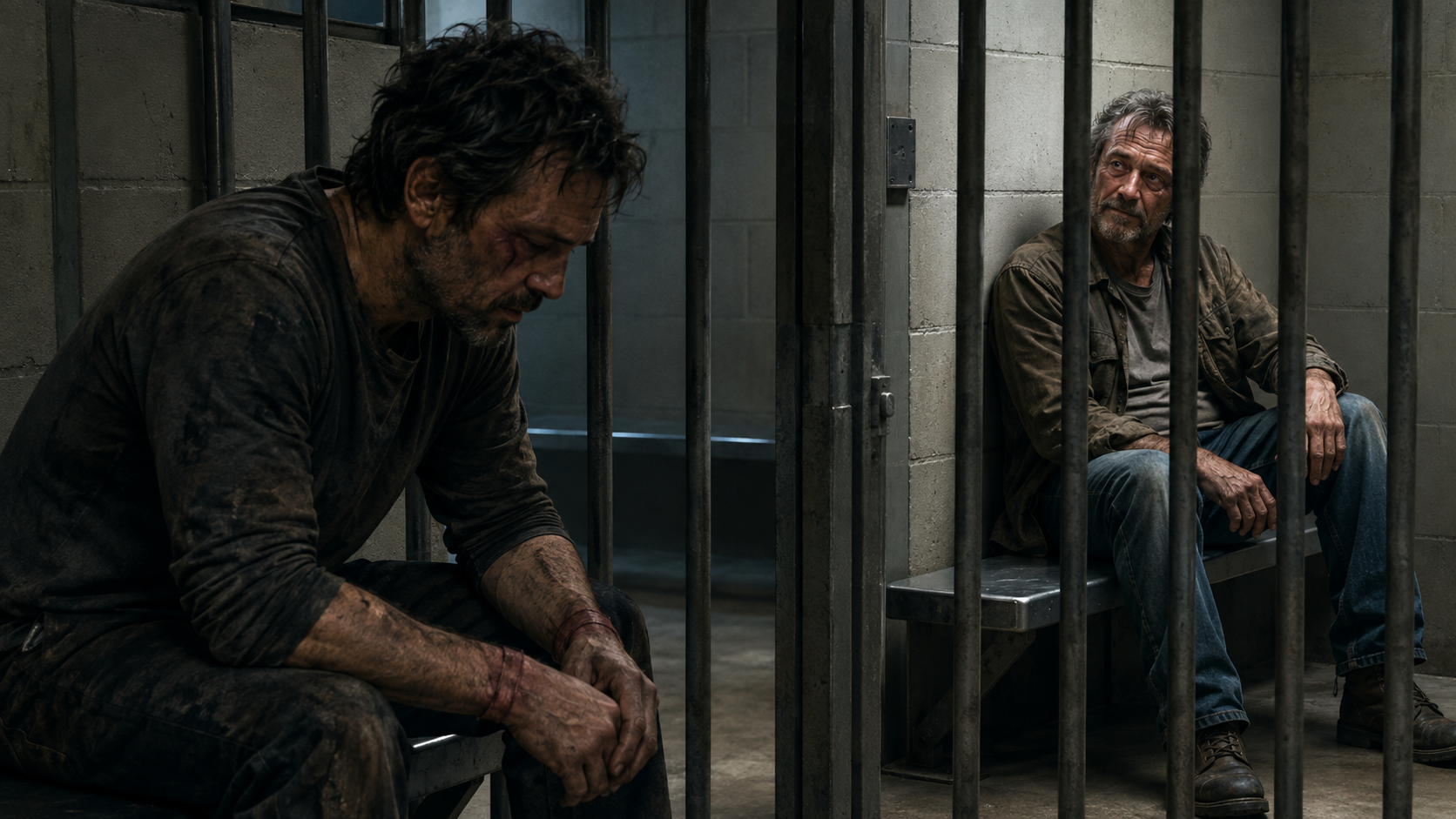
The cell was exactly what you’d expect.
Metal. Concrete. Regret.
The door shuts behind me with a sound that doesn’t echo—it settles. Like it belongs here.
I sit on the bench.
Lean back.
Stare at nothing.
Time doesn’t move in a place like this. It circles. Comes back around. Bites you again.
At some point, the door down the hall opened.
An officer appeared first, John following a step behind him.
“Two minutes,” the officer said. “Then you’re back out front.”
John nodded.
The officer withdrew, leaving the door propped open.
“Bodhi.”
I looked up.
“What are you doing here?” I ask.
“Dropping off a Subaru.” He shrugs. “Hit a delivery truck before taking out a bank of mailboxes.”
“That happen often?”
He glances down the hall, then back at me.
“To Subaru drivers? Yeah, all the time.” He smiles.
I returned the smirk
“Hey, keep your head up,” he says. “Things aren’t always what they seem.”
“That’s becoming a theme.”
He patted the bars twice then he’s gone.
I don’t know how long time passes before I hear movement from the next cell.
A shift.
A breath.
“Hey.”
The voice is rough. Worn thin.
I turn my head.
The man across from me sits slouched against the wall like gravity has a personal problem with him. His eyes are bloodshot, but they’re not empty.
Not completely.
“You look familiar,” he says.
“I get that a lot.”
He squints.
Studies me.
Then something clicks.
“Wait,” he says. “You’re… you’re that guy.”
I don’t answer.
He nods to himself.
“Yeah,” he says. “My kid… she used to love your books.”
Something tightens in my chest.
“Yeah?”
“Princess and Mr. Sullivan,” he says, like he’s saying a prayer he hasn’t used in a while. “Every night. Didn’t matter how late I got home. Didn’t matter how bad the day was.”
His voice softens.
Just a little.
“She’d wait,” he says. “Wouldn’t go to sleep without it.”
I swallow.
“That’s… good,” I manage.
He laughs.
Not happy.
Not sad.
Just honest.
“I screwed up a lot of things,” he says. “Still do. You can probably smell it from over there.”
I don’t respond.
He nods anyway.
“Her mom took her,” he says. “Can’t blame her. I wouldn’t leave me alone with a goldfish.”
He rubs his face with both hands.
“For five minutes a night, though…” he says. “I got to be the guy who showed up. The guy who did one thing right.”
He looks at me.
Really looks.
“Only thing I ever got right,” he says. “Reading those books.”
Silence settles between us.
Not heavy.
Not empty.
Real.
“Thanks,” I say.
He blinks.
“For what?”
“For showing up.”
That hits him.
I can see it.
He nods slowly.
“Yeah,” he says. “Yeah.”
He leans his head back against the wall.
“Hey,” he adds after a second. “In the last one… when Mr. Sullivan fixes the crown?”
I smile.
“Yeah.”
“She always made me read that part twice.”
“Good kid.”
“The best,” he says.
And just like that, the cell feels different.
Not better.
But… less alone.
The noise came in wrong.
Not loud.
Not chaotic.
Controlled.
Boots. Voices. Movement that knows exactly where it’s going.
I sit up.
The man across from me does the same.
“That ain’t normal,” he mutters.
No.
It isn’t.
Voices fill the hallway.
“—position—”
“—no delays—”
“—we take him now—”
A new voice cuts through.
Calm.
Certain.
“Bodhi.”
Not a question.
Henderson answers from somewhere down the hall.
“He’s in custody.”
“We’re aware.”
“He’s in my custody,” Henderson says. “That means something here.”
A pause.
Then—
“We’re not going to tell you again, Captain. Stand down.”
I move to the bars.
Down the hall, they come into view.
Not rushing.
Not hesitating.
They don’t look at the cells.
They don’t look at the officers.
They look straight ahead.
Like everything else is already decided.
Henderson steps into their path.
Solid.
Immovable.
“You don’t have jurisdiction here,” he says.
“You’re mistaken. You used to have jurisdiction here.”
“I don’t make mistakes when it comes to jurisdiction. I know the law.”
“No,” the man replies. “You know orders. You follow orders. You enforce those orders. And you don’t get to question where they come from.”
That lands harder than it should.
Henderson’s posture tightens.
“I give orders,” he says.
“Not tonight.”
Silence.
Something shifts behind Henderson.
He feels it.
I see it happen in real time.
He turns his head.
Looks at his officers.
One of them avoids his gaze.
Another doesn’t move.
A third—just watches.
Waiting.
Not for him.
For them.
Henderson turns fully now.
Slow.
Measured.
Taking it in.
Counting.
Calculating.
And then it hits him.
Not all at once.
But enough.
“You’ve got people in my department,” he says quietly.
No one answers.
They don’t have to.
Henderson exhales through his nose.
A soldier realizing the battlefield isn’t where he thought it was.
A politician realizing the votes were counted before he walked in the room.
“You’re already inside,” he says.
“Have been,” the man replies.
Henderson looks back at them.
Then at me.
And in that moment—
He knows.
Not just that something is wrong.
But how deep it goes.
How far back it started.
How little control he actually has.
His jaw sets.
He steps aside.
Not because he agrees.
Because he understands the cost of not moving.
The door to my cell opens.
Not kicked.
Not forced.
Opened.
Like it was always going to.
The man across from me sits up straighter.
“Saw you on the television upstairs,” he said. “They’re saying you burned down that ice cream place.”
“They’re saying a lot of things.”
“Hey,” he says, voice rough but steady. “You didn’t do it. Whatever they say. Remember that.”
I look at him.
“I know.”
“Then don’t let ‘em make you think you did,” he says. “That’s how it starts.”
I nod.
“I won’t.”
“Good,” he says. “Somebody’s gotta finish the story.”
That sticks.
Deeper than it should.
Hands take my arms.
Firm.
Professional.
Final.
They lead me out.
I pass Henderson.
We don’t stop.
But we look at each other.
And this time—
There’s no question left in his eyes.
Just a man who knows he’s been outplayed.
And doesn’t like it.
“You see it now,” I say.
Henderson doesn’t answer.
He doesn’t have to.
They take me down the hall.
Past the cells.
Past the doors.
Toward the exit.
The night waits outside.
Open.
Endless.
And as they push me through the doors—
I see it.
Parked across the street.
Engine running.
A dark vehicle with no markings.
No plates.
Windows dark enough to swallow every reflection.
Just a symbol etched faintly into the side.
A circle.
Split down the middle.
Like something that used to mean one thing—
and now means something else entirely.
The doors close behind me.
The sirens keep multiplying.
And nobody stops them.
Around the fire
Join the conversation.
Reader comments appear only after T. G. Bonfire approves them. That keeps this space thoughtful, human, and free of noise.