Chapter 2
Searching For Answers
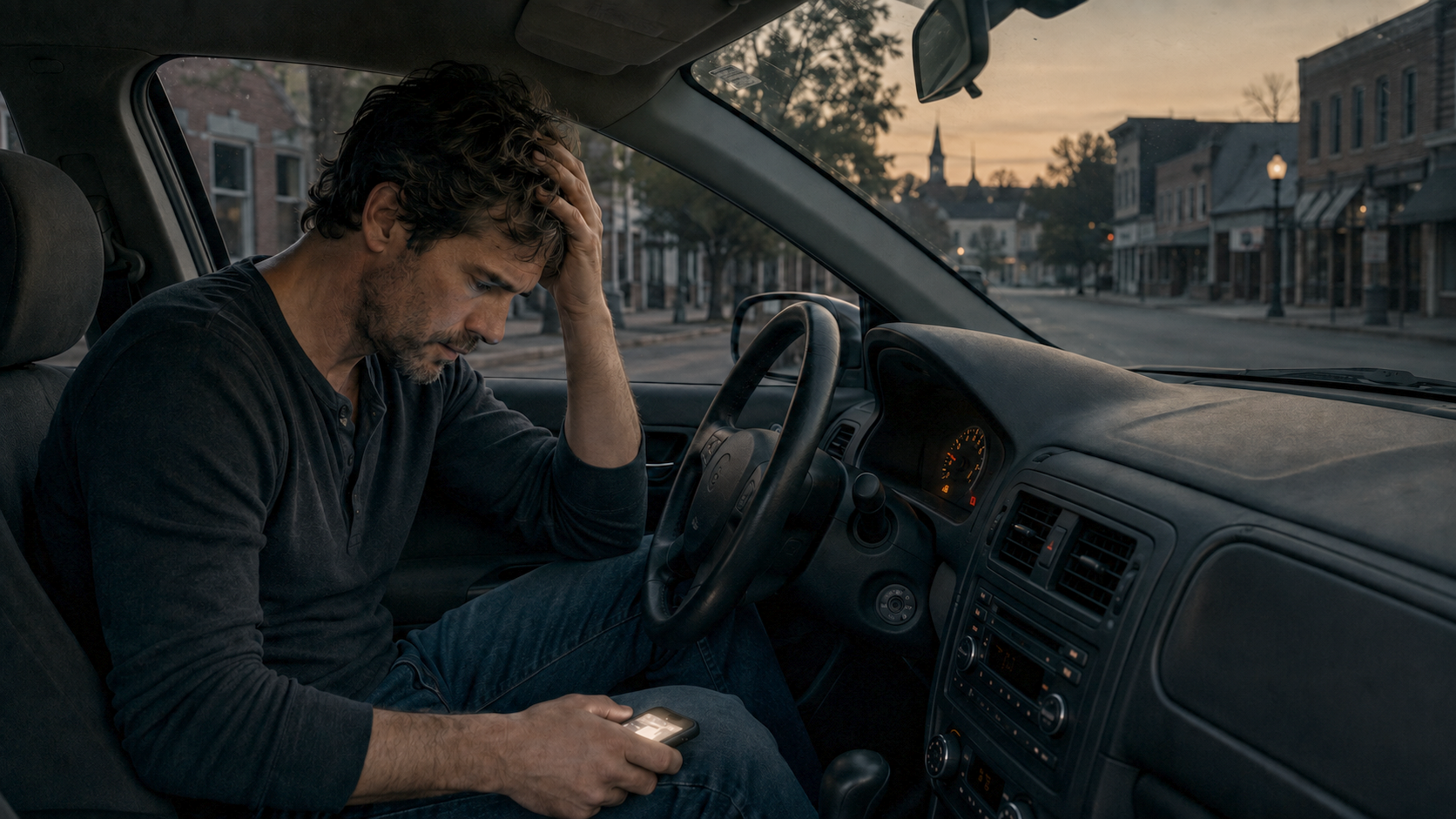
Rachel walked out of my life three years ago, but her shadow still lives in every room of the house.
Her coffee mug sits in the cabinet beside mine. I’ve moved it a dozen times over the years, trying to convince myself it’s just another object.
Somehow, it always ends up back where she left it.
Every corner hoards a memory. Every ordinary moment becomes a reminder. When something funny happens, or strange, or unexpectedly beautiful, my first instinct is still the same:
I have to tell Rachel about this.
I keep a running list in my head of things I’ll tell her when she comes back.
Because I believe she will.
I have to.
Some people think that belief is foolish. Maybe even pathetic. Others indulge it politely, the way you humor a child who insists monsters live under the bed.
You learn to recognize the difference.
People reveal their thoughts in small ways—tight smiles, quick glances, pauses that last a second too long. You start noticing those things when your life becomes a mystery everyone else thinks they’ve already solved.
At first, Mercantile Falls searched with me.
Churches sent casseroles to the house and volunteers to the roads. Students from the university walked drainage ditches in orange vests. Shirley closed the ice cream parlor for the first time anyone could remember and turned her parking lot into a command center, handing out coffee, flashlights, and wildly inaccurate maps she insisted were official.
For a little while, Rachel belonged to all of us.
Then days became weeks. Search parties thinned. The casseroles stopped. Reporters stopped asking where Rachel might be and started asking whether we’d argued, whether she had someone else, whether a man who made his living inventing stories might have invented this one too.
The town never stopped caring.
It just changed what it cared about.
At first, they searched for Rachel.
Eventually, they searched me.
The police say criminals return to the scene of the crime.
Well, here I am.
If someone took Rachel—if someone out there knows what happened—maybe one day they’ll come back just to watch. To see how the story ends.
If they do, I hope they find me watching too.
At first, after she disappeared, I talked to her like she was still in the room.
It started naturally enough. A comment about the weather. A complaint about junk mail. A random observation about something Sasha had done.
For a while, it felt comforting.
Then, one afternoon, I caught myself halfway through explaining a grocery flyer.
I stopped.
The silence in the kitchen hit me like a wave. I set the mail on the counter and cried harder than I ever had in my life.
Rachel wasn’t there.
And pretending she was wouldn’t bring her back.
For a long time afterward I imagined explanations. Ridiculous ones, mostly. Aliens. Secret government experiments. A traveling circus that needed someone good with spreadsheets.
But fantasies belong in fantasy land.
Reality was quieter.
And much colder.
Besides, if aliens had Rachel, they wouldn’t give her back.
The day she disappeared plays in my head like a film stuck on repeat.
I was working on the couch, answering emails, when Rachel kissed my forehead and told me she was running out for ice cream.
“Back in ten,” she said.
That was it.
A kiss, three words, and she was gone.
It could have been a hundred other goodbyes.
Not dramatic. Not important. Just another moment in a long string of ordinary moments.
At the time, those emails felt urgent. Deadlines. Contracts. The usual things writers convince themselves matter.
Looking back now, I would trade every one of them for thirty seconds more with her.
I should have followed her out the door.
Taken her keys.
Slashed her tires.
Bear-hugged her in the driveway until the neighbors called the police.
Anything.
But life doesn’t give you warnings when the important moments happen. You’re busy doing something meaningless while the real story slips quietly past.
By the time Sasha started whining, the house had already grown too quiet.
Evening had crept in while I worked. At some point, I had moved from the couch into the office.
The computer screen cast a blue glow across the room.
Rachel still wasn’t home.
At first, I wondered if she had come back without me noticing.
I called her name down the hallway.
Nothing.
Maybe she was in the backyard. Maybe she had stopped to talk with a neighbor. Maybe she had eaten the ice cream herself and was hiding the evidence.
Your brain invents a lot of maybes when it doesn’t have answers.
I searched the house anyway.
Every room.
Closets. Spare bedrooms.
Even the empty room we had once talked about turning into a nursery.
The backyard was already dark.
No car in the garage.
No car in the driveway.
No Rachel.
I called her phone.
Straight to voicemail.
“Hey,” I said, trying to sound casual. “Where are you?”
My voice cracked.
I hung up before the silence could answer.
The last thing I needed was to record a message with panic in my voice. I imagined Rachel teasing me by playing the message over and over. “You love me. You were scared for me. My hero.”
True love knows how to tease a man.
Sasha watched me from the hallway.
Her tail hung low. Her ears tilted forward the way they do when she senses something wrong.
I clipped her leash to her collar with shaking hands.
Accidents happen close to home.
Maybe Rachel had been hit by a car. Maybe she was lying in a ditch somewhere, waiting for help.
My aunt and cousin had died that way—forced off the road by a drunk driver, their car hidden from view while everyone waited for them to turn up.
I couldn’t let that happen to Rachel.
Sasha and I walked the neighborhood.
She stayed close to my side, ignoring her usual favorite patches of grass.
Halfway down the street, she stopped suddenly. Her body stiffened. A low growl vibrated in her chest.
She stared toward the dark front yard of an empty house.
“What is it?” I asked.
Nothing moved.
After a moment she relaxed and continued walking.
I told myself it was nothing.
But my heart kept racing.
At the four-way stop, Sasha pulled suddenly toward the ditch beside the road.
My heart jumped.
But it was only a trash bag caught in the weeds.
We checked the park.
The parking lot.
Every car we passed.
I kept dialing Rachel’s number, hoping for a miracle.
Nothing.
Back home, I started calling friends.
No one had seen her.
I checked social media.
Nothing.
I opened the location app on my phone.
Nothing. Her location was turned off.
Panic began pressing in from all sides.
I called her mother.
We had always gotten along. She welcomed me into the family from the beginning, like she’d already decided I belonged there.
But that night, something in her voice felt hesitant.
Concerned, yes, but also guarded.
“She probably just lost track of time,” she said.
The pause before she said it was just long enough to notice.
It was probably my imagination.
Fear makes you suspicious of everything.
Still, when we hung up, I couldn’t shake the feeling that she knew something she wasn’t saying.
If she did, she’s never told me.
Maybe she never will.
I stood at the kitchen counter, staring at the clock.
Seconds ticking away.
My fingers drumming against the stone surface.
Where would Rachel go?
Where had she said she was going?
The answer hit me like a firework.
Ice cream.
Shirley’s Squirrely Ice Cream Parlor.
According to Rachel, it was the best ice cream shop in the world. According to Shirley, the owner, it was also the most historically significant establishment ever devoted to frozen dairy.
Nothing inside the place matched.
Purple tables beside chrome stools.
Antique lamps next to lava lights.
Photos of celebrities covered the walls, each accompanied by a story Shirley swore was absolutely true.
One table supposedly inspired Jimi Hendrix to write “Purple Haze.”
The tall chair in the corner once belonged to a queen.
“Which queen?” someone would ask.
“All of them,” Shirley would reply.
People came for the ice cream.
They stayed for Shirley.
I drove there too fast.
Speeding down straightaways. Braking hard into turns.
My brain swung wildly between dread and hope.
Maybe Rachel was inside waiting for me.
Maybe she had already bought the ice cream.
Maybe she’d been trying to call.
A teenage girl stood behind the counter when I burst through the door.
“Rachel hasn’t been here tonight,” she said quickly.
I hadn’t said Rachel’s name yet.
Still, I pushed past her and checked the back room myself.
Shelves.
Freezers.
Boxes.
No Rachel.
Back in the car, I finally called the police.
The dispatcher asked calm, methodical questions.
Had we argued?
Had I called her friends?
Had I checked with the neighbors?
Their voice was steady. Professional.
The calmer they were, the more frantic I became.
They took Rachel’s information and said they would put out an alert for her car. Unless there was evidence she was in immediate danger, there wasn’t much more they could do yet.
I went home.
Sasha greeted me anxiously at the door.
She had chewed the frame of the French doors leading outside. Claw marks circled the handle where she’d tried to open it.
Her nose had smudged the glass.
Under normal circumstances, I would have been furious.
That night I understood.
She had been searching too.
We sat facing the front door until morning.
Waiting.
At dawn I started driving.
Through town, past the park, past the bookstore Rachel loved—circling the same streets like I might catch the world slipping and find her tucked back into it.
I was looking for her car.
For anything.
Hours later, I ran out of gas on our town’s considerably less famous Bourbon Street, less than a block from home.
It felt about right.
I could have used a drink. Or a miracle. Bourbon would’ve been easier.
Instead, I stared at Rachel’s picture on my phone—the one I’d taken in New Orleans.
Yellow summer dress lifting in the breeze. Hair caught in the light. Smile like she knew something I didn’t.
On that trip, every guy in the French Quarter had taken his shot. Smooth talkers. Street musicians. A guy with a parrot, for God’s sake. And I’d stood there pretending I wasn’t keeping count.
Rachel had noticed.
Of course she had.
“Relax,” she’d said, bumping her shoulder into mine, like she was letting me in on a joke. “I came home with you.”
Like there’d ever been another option.
I looked at the photo again.
“Where are you?” I asked.
Rachel didn’t answer.
Twenty minutes later someone tapped on my window.
The AAA driver stood there holding a red gas can. His name tag read John. I didn’t even remember calling them.
“You okay, man?” he asked.
I wasn’t.
Everything spilled out of me while he filled the tank.
Rachel. The ice cream. The empty house.
John listened without interrupting.
When I finally stopped talking, he scratched his chin.
“That’s a heavy thing to carry,” he said.
Then he asked a question that made my stomach tighten.
“What kind of car does she drive?”
“Honda Civic.”
John nodded slowly.
“I might’ve heard something about one on the police scanner earlier.”
My pulse slammed against my ribs.
“Are you serious?”
Before he could answer, my phone rang.
Unknown number.
I answered immediately.
“Mr. Lewis?” a voice said.
“Yes.”
“Sir, this is Queens County Police.”
My throat tightened.
“Do you own a Honda Civic?”
Until that moment, I had been afraid no one would find her.
Now I was afraid they already had.
Around the fire
Join the conversation.
Reader comments appear only after T. G. Bonfire approves them. That keeps this space thoughtful, human, and free of noise.