Chapter 10
Protection
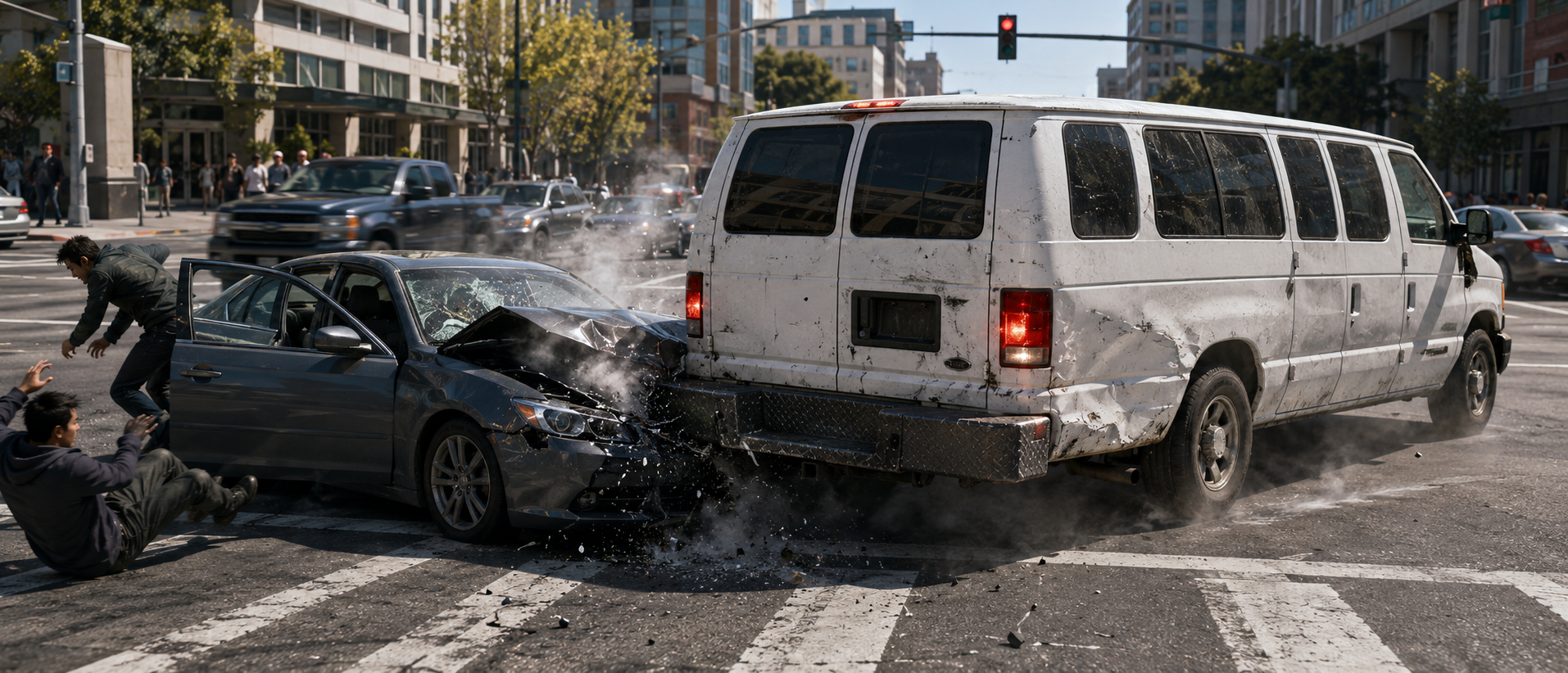
The Bus rattles when it idles.
Not enough to worry me. Just enough to remind me it’s lived a harder life than most people I know.
It’s a fifteen-passenger white van with faded paint, one dented rear quarter panel, a rear bumper reinforced past the point of reason, and an engine that complains every morning before agreeing to work. The children call it The Bus because children are generous with titles. If something carries them somewhere safe, they make it grander than it is.
Adults usually know better.
I drum my fingers on the wheel and watch morning traffic creep through Paradise.
The Village prefers pickups done quietly. One family at a time. Different routes. Different times. No patterns. No attention. No loose ends.
Today I’m making two stops and carrying six people.
Plus one dog with an attitude problem.
That alone tells me the world is slipping.
The Village almost never takes men.
Women and children come first. Always have. Always should. Men can be useful, dangerous, broken, or all three at once.
Usually all three.
If a man gets admitted, it means Patricia vouched for him, leadership argued over him, and somebody decided whatever trouble he brings is worth the risk.
Today’s passenger is the first father I’ve ever been sent to collect.
That still doesn’t sit right with me.
Maybe because when I was a kid, no man ever arrived to save anything.
My mother was offered help twice that I knew of. Safe housing. Food. A chance to start over. Women from places like the Village, back before ours had a name.
Both times she packed our things.
Both times she unpacked them the next day and said we were staying.
Both times some man came back through the door later.
That teaches a boy things.
Some of them useful.
Some of them poison.
I pull into the alley behind Paradise National Bank.
Vick is already waiting outside the rear service door in a navy suit sharp enough to cut bread. Hair combed. Shoes shining. Jaw tight.
The jaw is what matters.
Vick always looks polished. He only looks worried when there’s a reason.
“You’re late,” he says.
“I’m three minutes early.”
“You’re spiritually late.”
“That’s fair.”
He glances up and down the alley before stepping closer to my window.
“Someone called this morning pretending to be account holders,” he says. “Tried to clean out two dormant accounts.”
“Yours?”
He looks offended.
“I run a respectable institution.”
“Then whose?”
He lowers his voice.
“Accounts we use when people need to disappear.”
That takes some of the smile off me.
“They know names?”
“They knew enough to be dangerous.”
“Anyone trace the call?”
“Burner routed through three states.” He pauses. “And a gray sedan has circled the block twice.”
I look in the side mirror.
No sedan.
Doesn’t mean anything.
Predators know how to wait.
“You got my passengers?”
He nods and opens the rear service door.
The father comes first, carrying two duffel bags and the look of a man trying not to collapse in front of his children. Mid-thirties, maybe. Thin. Tired. Eyes that check exits before faces.
Behind him come the boys.
The oldest is around thirteen, shoulders squared like he volunteered to become the second parent. Then two younger boys close enough in age to pass for twins. One is missing a front tooth. The other drags a dinosaur backpack bigger than his torso.
The father stops at my door.
“You Gene?”
“Sometimes.”
“They said you’d get us there.”
“They say a lot of things.”
He tries to smile and fails.
“Thank you.”
“I’m just driving.”
That’s what I always say when I don’t want gratitude sticking to me.
He loads the boys into the back rows. They move quietly.
Too quietly.
Kids should argue over seats. These three choose positions like they’re hiding in church.
Vick leans on my window.
“Patricia signed off on him personally.”
“You all vote too?”
“We discussed.”
“That sounds like a yes.”
“It was not unanimous.”
“That sounds like a fun meeting.”
He straightens his cuffs.
“It was.”
I pull away before he can offer more wisdom.
The second stop is Sally’s Pet Supply on the far side of town.
Sally turned a failing storefront into a legitimate business and an unofficial waystation. Half the town thinks she sells kibble. The other half thinks she sells reptiles illegally.
Both halves are wrong.
When I roll into the lot, Sally stands near the front window pretending to rearrange birdseed.
Beside the entrance waits a woman, a little girl, and a white dog with curly hair and bad intentions.
The dog is Penelope. She usually lives behind the counter at Sally’s, terrorizing customers and shedding on merchandise.
Technically, she used to.
Ten minutes ago, Sally sold her to Charlotte for a dollar. Bill of sale, vaccination records, the whole deal. A mother and daughter leaving a pet store with a new dog doesn’t look like an escape. It looks like an expensive mistake.
Penelope sees my van and starts barking like she pays rent.
“Morning, Penelope,” I mutter.
I’ve met her once.
She tried to bite me.
We understand each other perfectly.
Sally opens the passenger door and climbs halfway inside.
“You’re being watched,” she says.
“That’s becoming popular.”
“Gray sedan across the street. Three men.”
“Recognize them?”
“One shaved head, one beard, one trying too hard to look normal.”
“So no.”
She doesn’t laugh.
The woman outside tightens her grip on her daughter’s hand.
“Charlotte’s jumpy,” Sally says. “Don’t crowd her.”
“I never crowd women.”
“You crowd oxygen.”
She hops down and waves them forward.
Charlotte climbs in first, posture stiff, eyes scanning everything. Her daughter follows, clutching the dog’s leash. Penelope leaps onto the seat and immediately hates everyone.
Then Charlotte looks up.
So does the father in the back.
Both of them freeze.
“You?” he says.
She goes pale.
“Aaron?”
The oldest boy sits bolt upright.
“Mom?”
Charlotte’s hand flies to her mouth.
One of the younger boys whispers, “Daddy?”
No one moves.
No one breathes.
Aaron stares at her like he’s seeing daylight after years underground.
“You wanted out?” he asks.
Charlotte blinks hard.
“I didn’t know you wanted out.”
“I thought you liked it there.”
“I thought you did.”
Years of poison in four sentences.
I look from one adult to the other.
Well.
That explains a lot.
Aaron stares at the little girl beside Charlotte, then at the woman herself, then back at his boys.
Charlotte’s face changes first.
“Where’s Stevie?”
Aaron’s changes right after.
“I thought he was with you.”
“With me? You said you were taking the boys.”
“I meant these three. I only got permission for these three. How was I supposed to explain taking a baby hunting?”
“I thought you meant all the boys.”
Charlotte makes a sound I hope never to hear again.
“He’s just a baby.”
The little boy with the dinosaur backpack starts crying immediately because children know panic before language.
Charlotte’s daughter starts crying because that seems fair.
Penelope barks at everyone.
I rub my forehead.
“My God,” Charlotte whispers.
Aaron sinks into his seat.
“What have we done?”
That’s when something cracks beside my head.
Glass explodes off the passenger mirror.
Charlotte screams.
The children duck.
Penelope loses her mind.
I look through the side window just in time to see the gray sedan pulling from the curb.
Three men inside.
One of them leans halfway out the back window, holding a pistol like it offended him personally.
He shouts something about traitors and bloodlines.
“Well,” I say. “That’s rude.”
I slam the van into drive.
The tires chirp.
We shoot out of the lot hard enough to pin everyone backward.
“Seatbelts!”
Aaron’s boys are already buckled. Charlotte and her daughter grab for their straps as I hit the gas.
Penelope observes no safety regulations whatsoever.
The sedan comes after us.
I cut left down a side street, right through an alley, then bounce over a pothole large enough to have its own weather system.
Kids scream.
Dog barks.
Aaron shouts directions I don’t need.
Charlotte shouts prayers I don’t judge.
I stay calm.
This is movement.
Movement I understand.
I’ve spent years learning how pressure works. How panic spreads. How to keep your hands steady when everyone around you loses theirs.
Honestly, I wish I had two grenades and worse morals.
The sedan stays with us.
Closer now.
I see the shaved-head passenger lean out again.
Another shot rings out.
This one hits the rear quarter panel with a metallic pop.
Now I get irritated.
“You shoot my van,” I say aloud, “you make it personal.”
We fly through downtown Paradise with horns blaring behind us. I take alleys too fast, corners too sharp, and one narrow lane between a florist and a tax office that feels spiritually illegal.
Then fate does what fate loves to do.
Red light.
Main and Chester.
Cross traffic moving.
Nowhere clean to go.
The gray sedan slides up behind us, grinning through its grille.
The three men start climbing out.
I smile for the first time all morning.
The rear bumper of The Bus was reinforced years ago by a friend of mine who used to run demolition derby at county fairs. Said every vehicle deserved one good surprise.
I throw the van into reverse.
“What are you doing?” Aaron yells.
“Civic engagement.”
I floor it backward.
The reinforced steel catches the sedan square in the front bumper with a crunch that sings to me. The hood buckles. The radiator bursts steam. One of the men falls on his backside trying to jump clear.
Then I slam The Bus into drive and blast through the red light.
Brakes scream around us.
Horns wail.
Somebody throws a newspaper.
We’re gone.
No one speaks for a full minute.
Then the oldest boy in the back says, very softly, “That was awesome.”
His father covers the kid’s ears too late.
I don’t head for the Village.
Not yet.
I spend twenty minutes doubling back through Paradise. Change roads. Cut beneath the highway. Pull into a gas station and watch both entrances without shutting off the engine.
No gray sedan.
No replacement.
Nobody hanging back.
Only when I’m sure we’re alone do I take the road toward the Village.
The road narrows into woods and discretion.
By the time we reach the gate, everyone has gone quiet again.
Adrenaline burns fast.
Fear lingers.
Patricia is waiting with a small welcome crew near the main house.
Smart numbers.
Never too many.
Crowds can feel like attacks to people who’ve escaped one.
She comes down the steps smiling warmly enough to thaw stone.
Then she sees my missing mirror and dented panel.
The smile stays.
Her eyes change.
Doors open.
Volunteers move in gently. Bags are carried. Children are greeted. Charlotte’s daughter receives a stuffed rabbit from another kid no older than seven.
Penelope immediately betrays everyone by wagging at strangers.
Aaron steps out last with his boys.
Charlotte follows more slowly.
They look at each other like two people waking from the same nightmare.
“I never wanted to leave you,” Aaron says.
Charlotte’s face folds.
“I thought you already had.”
They meet in the gravel and hold on like drowning people.
Even the oldest boy turns away to give them privacy.
Patricia doesn’t interrupt. She simply guides the children toward the porch and lets the moment breathe.
Then Charlotte turns back to me from the bottom of the steps.
“You said we’d be safe.”
“I said I’d get you here.”
“That’s not the same thing.”
“No,” I say. “But it’s step one.”
She holds my eyes for another second.
“Promise me the rest.”
That word weighs more with some people than others.
“I promise.”
She nods once and lets Patricia lead her inside.
Then Patricia comes to my window.
“What happened?”
“Traffic.”
“Try again.”
“They’re married,” I say. “Still love each other.”
Patricia looks toward the porch.
“They came through different contacts,” she says. “Different last names. Nobody connected them.”
“That’ll do it.”
“Anything else?”
“They left a baby behind.”
Patricia remains calm.
“I know someone who can take care of that.”
“I can do it.”
She reaches through the open window and rests her hand against my cheek.
“Sweetie,” she says, “we need a shadow, not a thunderstorm.”
Fair.
“Anything else?” she asks.
“Three patriots in a gray sedan misunderstood road etiquette.”
She looks past me at the missing mirror and damaged panel.
“The Bus is burned.”
“I know.”
“You can’t bring it back here.”
“I’ll get rid of it after Portia’s.”
“Gene.”
“I know.”
Her eyes stay on mine.
“Are we in danger?”
“Yes.”
“Are you?”
I glance at my watch.
1:32.
“Absolutely.”
She rests a hand on the door.
“Then don’t go.”
We both know I’m going.
We both know why.
I give her the only honesty I have left.
“I have to.”
She studies me for a long moment.
Then she says quietly, “Come back.”
That’s as close to begging as Patricia Brown ever gets.
“I promise.”
This one costs more.
I put The Bus into gear and head toward my two-o’clock appointment with Ted Polmey.
Behind me, the Village settles another family.
Ahead of me, trouble is already checking its watch.
Around the fire
Join the conversation.
Reader comments appear only after T. G. Bonfire approves them. That keeps this space thoughtful, human, and free of noise.